What is the Ethereum Name Service (ENS)?
The Ethereum Name Service, commonly known as ENS, represents a pivotal innovation in the blockchain ecosystem. At its core, ENS functions as a decentralized domain name system for Ethereum addresses, transforming complex, alphanumeric strings like “0x1234abcd…” into human-readable names such as “journalducoin.eth”. This simple yet powerful abstraction makes interacting with Ethereum-based applications far more intuitive, reducing errors in transactions and enhancing user experience across wallets, decentralized exchanges (DEXs), and decentralized finance (DeFi) protocols.
Launched in 2017 by the Ethereum Foundation and a team of developers including Nick Johnson, ENS quickly gained traction as Web3’s equivalent to the Domain Name System (DNS) that powers the traditional internet. By 2026, ENS registrations have surged, with millions of domains minted, reflecting the explosive growth of Ethereum’s layer-2 ecosystems and the broader adoption of decentralized identities. Beyond basic address mapping, ENS supports features like text records for metadata, avatar images, and even content hashing for decentralized websites via services like IPFS.
The protocol’s decentralized nature relies on smart contracts deployed on Ethereum, where users bid for domain names through reverse auctions and renew them periodically using ETH. This model incentivizes long-term commitment while keeping the system permissionless. For crypto enthusiasts, ENS domains aren’t just vanity plates—they’re versatile assets. They enable seamless NFT transfers, social media handles in Web3 spaces, and programmable redirects, solidifying ENS’s role in the decentralized web.
The Rise of Governance Tokens in DeFi: ENS Joins the Trend
Since early 2020, governance tokens have become a cornerstone of DeFi evolution, empowering communities to steer protocol development through on-chain voting. Projects like Compound, Uniswap, and Aave pioneered this model, distributing tokens to users and contributors to decentralize decision-making. These governance tokens grant holders voting power on proposals ranging from parameter tweaks to treasury allocations, fostering a sense of ownership in otherwise code-driven systems.
In late 2021, ENS followed suit, announcing its native governance token to transition control from a core team to a fully decentralized autonomous organization (DAO). This move aligned with Ethereum’s ethos of progressive decentralization, especially as ENS matured beyond its experimental phase. The announcement sparked excitement, culminating in an airdrop that rewarded early adopters and underscored the token’s dual role as both utility and responsibility.
By 2026, the landscape has evolved further. Governance tokens now integrate with advanced mechanisms like quadratic voting and conviction voting to mitigate plutocracy—where wealth concentrates power. ENS’s implementation reflects these lessons, but it also highlights persistent challenges in achieving true decentralization amid growing institutional involvement.
Why Governance Tokens Matter for ENS
- Protocol Upgrades: Token holders vote on features like multi-chain support, which ENS has expanded to Polygon and Optimism by 2026.
- Treasury Management: Funding grants for developers and integrations.
- Risk Mitigation: Community oversight prevents exploits, as seen in past DeFi hacks.
This structure positions ENS not just as a naming service but as a foundational layer for Web3 identity, with governance ensuring adaptability to emerging standards like ERC-4337 account abstraction.
Breaking Down the ENS Token Distribution
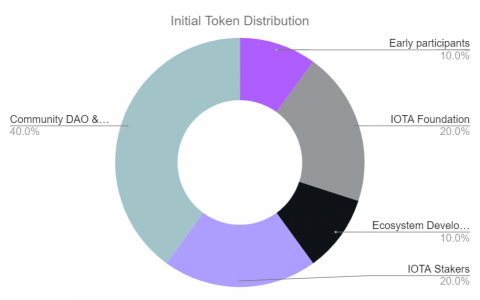
The ENS token distribution was meticulously designed to balance incentives across stakeholders, totaling a fixed supply of 100 million tokens. Here’s the allocation at launch:
- 50% to DAO Treasury: The largest slice, intended for community-driven initiatives, grants, and ecosystem growth. By 2026, this treasury has funded partnerships and layer-2 migrations, demonstrating prudent management.
- 25% Airdrop to Users: Distributed to those who interacted with ENS prior to a snapshot date, based on registration history and activity. This retroactive reward celebrated pioneers without requiring upfront purchases.
- 19% to Core Contributors: Vested over four years to align long-term incentives with protocol health.
- 6% to Future Contributors: Reserved for ongoing development, ensuring talent retention.
The airdrop, in particular, transcended mere financial gain. ENS leadership emphasized it as a “responsibility,” urging recipients to delegate voting power actively. This ethos aimed to cultivate engaged governance rather than speculative trading. Data from the era shows over 300,000 wallets claimed tokens, injecting liquidity while bootstrapping the DAO.
Critics, however, questioned the fairness. Whales who farmed registrations dominated claims, echoing issues in other airdrops like Arbitrum’s. Yet, vesting schedules and delegation mechanics have helped mitigate dumps, with ENS maintaining relevance through utility upgrades.
How ENS DAO Governance Operates
The ENS DAO operates via a delegation-based voting system on the Snapshot platform and Ethereum’s Gasless governance via Tally. Token holders propose or vote on Ethereum Improvement Proposals (EIPs) tailored to ENS, such as fee structures or registrar contracts. To streamline participation, users delegate their voting power to representatives without relinquishing ownership—tokens remain in the holder’s wallet, earning potential rewards.
Delegation Dynamics: Elected delegates, often domain experts, aggregate votes to represent broader interests. Notable early delegates included Victor Zhang, CEO of an Ethereum wallet provider, and Gregory Rocco, co-founder of a decentralized identity firm. Both received substantial airdrops for contributions and advocated for DAO expansion in their domains.
In practice, a proposal advances through discussion forums, temperature checks, and on-chain execution if approved. By 2026, ENS DAO has executed hundreds of proposals, including privacy enhancements and cross-chain name resolution, proving the model’s efficacy. However, low voter turnout—often under 20%—remains a hurdle, exacerbated by Ethereum’s high gas fees pre-layer-2 dominance.
Centralization Risks: The Coinbase Shadow and Beyond
Despite noble intentions, ENS governance faces scrutiny over centralization risks. Coinbase Ventures emerged as the second-largest voting entity post-airdrop, wielding influence disproportionate to its decentralized ideals. Victor Zhang voiced concerns in interviews, warning that a centralized custodian like Coinbase could sway decisions for proprietary gain, potentially compromising ENS’s neutrality as a public good.
“We need to ensure ENS remains a public utility, not beholden to any single party’s interests,” Zhang cautioned, highlighting Coinbase’s custody of user-delegated tokens. This mirrors broader DeFi tensions: custodians hold billions in assets, their delegates amplifying corporate sway.
Comparisons abound. Uniswap’s 2022 governance scare involved a mercenary proposal nearly draining treasury funds, underscoring DAO vulnerabilities. ENS averted similar pitfalls through vigilant delegates, but 2026 data reveals ongoing concentration: top 10 addresses control over 30% of voting power, per Dune Analytics dashboards.
Mitigating Centralization: Strategies and Evolutions
- Vesting and Cliffs: Preventing instant dumps by large holders.
- Delegation Caps: Experimental limits on per-delegate power.
- Optimistic Approvals: Faster execution with challenge periods.
- L2 Migration: Reducing costs to boost retail participation.
ENS’s saga illustrates DeFi’s paradox: governance tokens decentralize control from founders but risk recentralizing via whales or institutions. As Ethereum scales via danksharding, expect refined mechanisms like soulbound delegation tokens to address these.
Lessons from ENS: Balancing Decentralization and Practicality
ENS’s journey offers timeless insights for governance token projects. First, airdrops excel at distribution but falter without education—many recipients sold immediately, diluting participation. Second, delegation empowers but demands transparency; anonymous delegates erode trust.
By 2026, ENS has matured: domain registrations exceed 2.5 million, integrations span 500+ dApps, and the DAO treasury supports a thriving grants program. Yet, centralization lingers, prompting proposals for token burns and ve-model (vote-escrow) adoption, akin to Curve Finance.
Comparatively, projects like Optimism’s retroactive public goods funding provide blueprints. ENS holders should prioritize proposals enhancing censorship resistance, such as off-chain name squatting prevention. For users, the takeaway is active engagement: claim domains, delegate thoughtfully, and monitor Dune dashboards for power shifts.
In summary, ENS governance tokens exemplify DeFi’s aspirational yet imperfect decentralization. While Coinbase’s heft poses risks, community vigilance and iterative improvements keep the protocol resilient. Crypto participants should view governance not as passive income but as stewardship. Actionable steps include: auditing your ENS holdings for delegation, proposing small upgrades via forums, and diversifying across DAOs to hedge centralization. As Web3 identities proliferate, ENS’s health directly impacts Ethereum’s usability—stay informed, vote wisely, and contribute to a truly decentralized future.
Frequently Asked Questions
What is the ENS governance token used for?
The ENS token enables voting in the ENS DAO on protocol upgrades, treasury spending, and parameter changes, with delegation allowing users to amplify their voice without direct participation.
How was the ENS token distributed?
Tokens were allocated 50% to the DAO treasury, 25% via airdrop to past users, 19% to core contributors (vested), and 6% to future contributors, promoting broad initial distribution.
What are the main centralization risks in ENS governance?
Key risks include concentrated voting power among large holders like Coinbase, low participation rates, and potential influence from custodians, which could undermine the protocol’s neutrality.
Can anyone participate in ENS DAO voting?
Yes, by holding ENS tokens and either voting directly or delegating to representatives; no minimum is required, though gas fees on Ethereum can be a barrier—use layer-2 solutions for efficiency.
Has ENS addressed centralization concerns since launch?
Progress includes vesting schedules, delegation tools, and L2 integrations, but challenges persist; ongoing proposals aim at mechanisms like vote-escrow to further distribute power.
内容搜集自网络,整理者:dfkai,如若侵权请联系站长,会尽快删除。